Showing posts with label aging. Show all posts

Friday, July 27, 2012

The Song of Wandering Aengus by William Butler Yeats


The Song of Wandering Aengus
by William Butler Yeats

I went out to the hazel wood,
Because a fire was in my head,
And cut and peeled a hazel wand,
And hooked a berry to a thread;
And when white moths were on the wing,
And moth-like stars were flickering out,
I dropped the berry in a stream
And caught a little silver trout.

When I laid it on the floor
I went to blow the fire a-flame,
But something rustled on the floor,
And someone called me by my name:
It had become a glimmering girl
With apple blossom in her hair
Who called me by my name and ran
And faded through the brightening air.

Though I am old with wandering
Through hollow lands and hilly lands,
I will find out where she has gone,
And kiss her lips and take her hands;
And walk among long dappled grass,
And pluck till time and times are done,
The silver apples of the moon,
The golden apples of the sun.


Great poetry is in the words a poet chooses. I love Yeats way with words. A link to learn more is here. http://www.poetryfoundation.org/bio/william-butler-yeats 

Sunday, July 8, 2012

Rabbi Ben Ezra by Robert Browning

Robert Browning poet
Rabbi Ben Ezra 
by Robert Browning

Grow old along with me!
The best is yet to be,
The last of life, for which the first was made:
Our times are in His hand
Who saith "A whole I planned,
Youth shows but half; trust God: see all, nor be afraid!''

Not that, amassing flowers,
Youth sighed "Which rose make ours,
Which lily leave and then as best recall?"
Not that, admiring stars,
It yearned "Nor Jove, nor Mars;
Mine be some figured flame which blends, transcends them all!"

Not for such hopes and fears
Annulling youth's brief years,
Do I remonstrate: folly wide the mark!
Rather I prize the doubt
Low kinds exist without,
Finished and finite clods, untroubled by a spark.

Poor vaunt of life indeed,
Were man but formed to feed
On joy, to solely seek and find and feast:
Such feasting ended, then
As sure an end to men;
Irks care the crop-full bird? Frets doubt the maw-crammed beast?

Rejoice we are allied
To That which doth provide
And not partake, effect and not receive!
A spark disturbs our clod;
Nearer we hold of God
Who gives, than of His tribes that take, I must believe.

Then, welcome each rebuff
That turns earth's smoothness rough,
Each sting that bids nor sit nor stand but go!
Be our joys three-parts pain!
Strive, and hold cheap the strain;
Learn, nor account the pang; dare, never grudge the throe!

For thence,—a paradox
Which comforts while it mocks,—
Shall life succeed in that it seems to fail:
What I aspired to be,
And was not, comforts me:
A brute I might have been, but would not sink i' the scale.

What is he but a brute
Whose flesh has soul to suit,
Whose spirit works lest arms and legs want play?
To man, propose this test—
Thy body at its best,
How far can that project thy soul on its lone way?

Yet gifts should prove their use:
I own the Past profuse
Of power each side, perfection every turn:
Eyes, ears took in their dole,
Brain treasured up the whole;
Should not the heart beat once "How good to live and learn?"

Not once beat "Praise be Thine!
I see the whole design,
I, who saw power, see now love perfect too:
Perfect I call Thy plan:
Thanks that I was a man!
   Maker, remake, complete,—I trust what Thou shalt do!"

For pleasant is this flesh;
Our soul, in its rose-mesh
Pulled ever to the earth, still yearns for rest;
Would we some prize might hold
To match those manifold
Possessions of the brute,—gain most, as we did best!

Let us not always say,
"Spite of this flesh to-day
I strove, made head, gained ground upon the whole!"
As the bird wings and sings,
Let us cry "All good things
Are ours, nor soul helps flesh more, now, than flesh helps soul!"

Therefore I summon age
To grant youth's heritage,
Life's struggle having so far reached its term:
Thence shall I pass, approved
A man, for aye removed
From the developed brute; a god though in the germ.

And I shall thereupon
Take rest, ere I be gone
Once more on my adventure brave and new:
Fearless and unperplexed,
When I wage battle next,
What weapons to select, what armour to indue.

Youth ended, I shall try
My gain or loss thereby;
Leave the fire ashes, what survives is gold:
And I shall weigh the same,
Give life its praise or blame:
Young, all lay in dispute; I shall know, being old.

For note, when evening shuts,
A certain moment cuts
The deed off, calls the glory from the grey:
A whisper from the west
Shoots—"Add this to the rest,
Take it and try its worth: here dies another day."

So, still within this life,
Though lifted o'er its strife,
Let me discern, compare, pronounce at last,
This rage was right i' the main,
That acquiescence vain:
The Future I may face now I have proved the Past."

For more is not reserved
To man, with soul just nerved
To act to-morrow what he learns to-day:
Here, work enough to watch
The Master work, and catch
Hints of the proper craft, tricks of the tool's true play.

As it was better, youth
Should strive, through acts uncouth,
Toward making, than repose on aught found made:
So, better, age, exempt
From strife, should know, than tempt
Further. Thou waitedst age: wait death nor be afraid!

Enough now, if the Right
And Good and Infinite
Be named here, as thou callest thy hand thine own
With knowledge absolute,
Subject to no dispute
From fools that crowded youth, nor let thee feel alone.

Be there, for once and all,
Severed great minds from small,
Announced to each his station in the Past!
Was I, the world arraigned,
Were they, my soul disdained,
Right? Let age speak the truth and give us peace at last!

Now, who shall arbitrate?
Ten men love what I hate,
Shun what I follow, slight what I receive;
Ten, who in ears and eyes
Match me: we all surmise,
They this thing, and I that: whom shall my soul believe?

Not on the vulgar mass
Called "work," must sentence pass,
Things done, that took the eye and had the price;
O'er which, from level stand,
The low world laid its hand,
Found straightway to its mind, could value in a trice:

But all, the world's coarse thumb
And finger failed to plumb,
So passed in making up the main account;
All instincts immature,
All purposes unsure,
That weighed not as his work, yet swelled the man's amount:

Thoughts hardly to be packed
Into a narrow act,
Fancies that broke through language and escaped;
All I could never be,
All, men ignored in me,
This, I was worth to God, whose wheel the pitcher shaped.

Ay, note that Potter's wheel,
That metaphor! and feel
Why time spins fast, why passive lies our clay,—
Thou, to whom fools propound,
When the wine makes its round,
"Since life fleets, all is change; the Past gone, seize to-day!"

Fool! All that is, at all,
Lasts ever, past recall;
Earth changes, but thy soul and God stand sure:
What entered into thee,
That was, is, and shall be:
Time's wheel runs back or stops: Potter and clay endure.

He fixed thee mid this dance
Of plastic circumstance,
This Present, thou, forsooth, wouldst fain arrest:
Machinery just meant
To give thy soul its bent,
Try thee and turn thee forth, sufficiently impressed.

What though the earlier grooves,
Which ran the laughing loves
Around thy base, no longer pause and press?
What though, about thy rim,
Skull-things in order grim
Grow out, in graver mood, obey the sterner stress?

Look not thou down but up!
To uses of a cup,
The festal board, lamp's flash and trumpet's peal,
The new wine's foaming flow,
The Master's lips a-glow!
Thou, heaven's consummate cup, what need'st thou with earth's wheel?

But I need, now as then,
Thee, God, who mouldest men;
And since, not even while the whirl was worst,
Did I,—to the wheel of life
With shapes and colours rife,
Bound dizzily,—mistake my end, to slake Thy thirst:

So, take and use Thy work:
Amend what flaws may lurk,
What strain o' the stuff, what warpings past the aim!
My times be in Thy hand!
Perfect the cup as planned!
Let age approve of youth, and death complete the same!

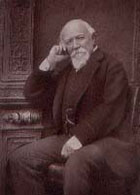
Each stanza is filled with wisdom. A link to learn more is here. http://www.poemhunter.com/robert-browning/biography/

Sunday, January 22, 2012

A Celebration of Charis: I. His Excuse for Loving


A Celebration of Charis: I. His Excuse for Loving

BY BEN JONSON
Let it not your wonder move,
Less your laughter, that I love.
Though I now write fifty years,
I have had, and have, my peers;
Poets, though divine, are men,
Some have lov'd as old again.
And it is not always face,
Clothes, or fortune, gives the grace;
Or the feature, or the youth.
But the language and the truth,
With the ardour and the passion,
Gives the lover weight and fashion.
If you then will read the story,
First prepare you to be sorry
That you never knew till now
Either whom to love or how;
But be glad, as soon with me,
When you know that this is she
Of whose beauty it was sung;
She shall make the old man young,
Keep the middle age at stay,
And let nothing high decay,
Till she be the reason why
All the world for love may die.


Great old poem on love and aging. A link to learn more is here. 

Wednesday, January 4, 2012

Of the last verses in the book by Edmund Waller


Of the Last Verses in the Book

BY EDMUND WALLER
When we for age could neither read nor write,
The subject made us able to indite.
The soul, with nobler resolutions deckt,
The body stooping, does herself erect:
No mortal parts are requisite to raise
Her, that unbodied can her Maker praise.

The seas are quiet, when the winds give o’er,
So calm are we, when passions are no more:
For then we know how vain it was to boast
Of fleeting things, so certain to be lost.
Clouds of affection from our younger eyes
Conceal that emptiness, which age descries.

The soul’s dark cottage, batter’d and decay’d,
Lets in new light through chinks that time has made;
Stronger by weakness, wiser men become
As they draw near to their eternal home:
Leaving the old, both worlds at once they view,
That stand upon the threshold of the new.

This is a great old poem. I can contemplate this one, I especially like the 13 and 14 lines. A link to read more is here. http://en.wikipedia.org/wiki/Edmund_Waller

Monday, November 7, 2011

Reply to a Magistrate By Wang Wei

Reply to a Magistrate
by Wang Wei


Late in life, I care for ease alone—
to hell with official concerns.

Look! I make no plans for the future
but to go back to my forest home again.

Let pine winds loosen my robes,
mountain moons play my lute.

You want to taste success or failure?
A lone fisherman sings out on the water.


I like these simple poems to think about. A link to read more about this poet is here. http://en.wikipedia.org/wiki/Wang_Wei_(8th_century_poet)

Saturday, October 15, 2011

Change by Kathleen Raine

Kathleen Jessie RaineChange 
by Kathleen Raine


Change
Said the sun to the moon,
You cannot stay.

Change
Says the moon to the waters,
All is flowing.

Change
Says the fields to the grass,
Seed-time and harvest,
Chaff and grain.

You must change said,
Said the worm to the bud,
Though not to a rose,

Petals fade
That wings may rise
Borne on the wind.

You are changing
said death to the maiden, your wan face
To memory, to beauty.

Are you ready to change?
Says the thought to the heart, to let her pass
All your life long

For the unknown, the unborn
In the alchemy
Of the world's dream?

You will change,
says the stars to the sun,
Says the night to the stars.


Wonderful poem of change and aging. The circle of life, I've come to appreciate. A link to read more is here. http://allpoetry.com/Kathleen_Raine

Saturday, August 13, 2011

Long time a child, and still a child, when years by Hartley Coleridge


Long time a child, and still a child, when years

BY HARTLEY COLERIDGE
Long time a child, and still a child, when years
Had painted manhood on my cheek, was I,—
For yet I lived like one not born to die;
A thriftless prodigal of smiles and tears,
No hope I needed, and I knew no fears.
But sleep, though sweet, is only sleep, and waking,
I waked to sleep no more, at once o’ertaking
The vanguard of my age, with all arrears
Of duty on my back. Nor child, nor man,
Nor youth, nor sage, I find my head is grey,
For I have lost the race I never ran:
A rathe December blights my lagging May;
And still I am a child, tho’ I be old,
Time is my debtor for my years untold.


Old poetry seldom ages. A link to learn more about this poet is here. http://en.wikipedia.org/wiki/Hartley_Coleridge


Oft, in the Stilly Night (Scotch Air) by Thomas Moore


Oft, in the Stilly Night (Scotch Air)

BY THOMAS MOORE


Oft, in the stilly night,
Ere slumber’s chain has bound me,
Fond memory brings the light
Of other days around me;
The smiles, the tears,
Of boyhood’s years,
The words of love then spoken;
The eyes that shone,
Now dimm’d and gone,
The cheerful hearts now broken!
Thus, in the stilly night,
Ere slumber’s chain hath bound me,
Sad memory brings the light
Of other days around me.

When I remember all
The friends, so link’d together,
I’ve seen around me fall,
Like leaves in wintry weather;
I feel like one
Who treads alone
Some banquet-hall deserted,
Whose lights are fled,
Whose garlands dead,
And all but he departed!
Thus, in the stilly night,
Ere slumber’s chain has bound me,
Sad memory brings the light
Of other days around me.

Makes me think of the different periods in life. A link to read more is here. http://www.poetryfoundation.org/bio/thomas-moore

Tuesday, July 19, 2011

Bleak Weather by Ella Wheeler Wilcox


Bleak Weather

BY ELLA WHEELER WILCOX
Dear love, where the red lillies blossomed and grew,
The white snows are falling;
And all through the wood, where I wandered with you,
The loud winds are calling;
And the robin that piped to us tune upon tune,
Neath the elm—you remember,
Over tree-top and mountain has followed the June,
And left us—December.

Has left, like a friend that is true in the sun,
And false in the shadows.
He has found new delights, in the land where he's gone,
Greener woodlands and meadows.
What care we? let him go! let the snow shroud the lea,
Let it drift on the heather!
We can sing through it all; I have you—you have me,
And we’ll laugh at the weather.

The old year may die, and a new one be born
That is bleaker and colder;
But it cannot dismay us; we dare it—we scorn,
For love makes us bolder.
Ah Robin! sing loud on the far-distant lea,
Thou friend in fair weather;
But here is a song sung, that’s fuller of glee,
By two warm hearts together.

Sweet, lovely poem. A link to read more is here. http://www.poetryfoundation.org/bio/ella-wheeler-wilcox